
The Perfect Bandeja: A Step-by-Step Guide
Master padel’s most lethal weapon with this step-by-step breakdown to hitting the perfect bandeja every time.
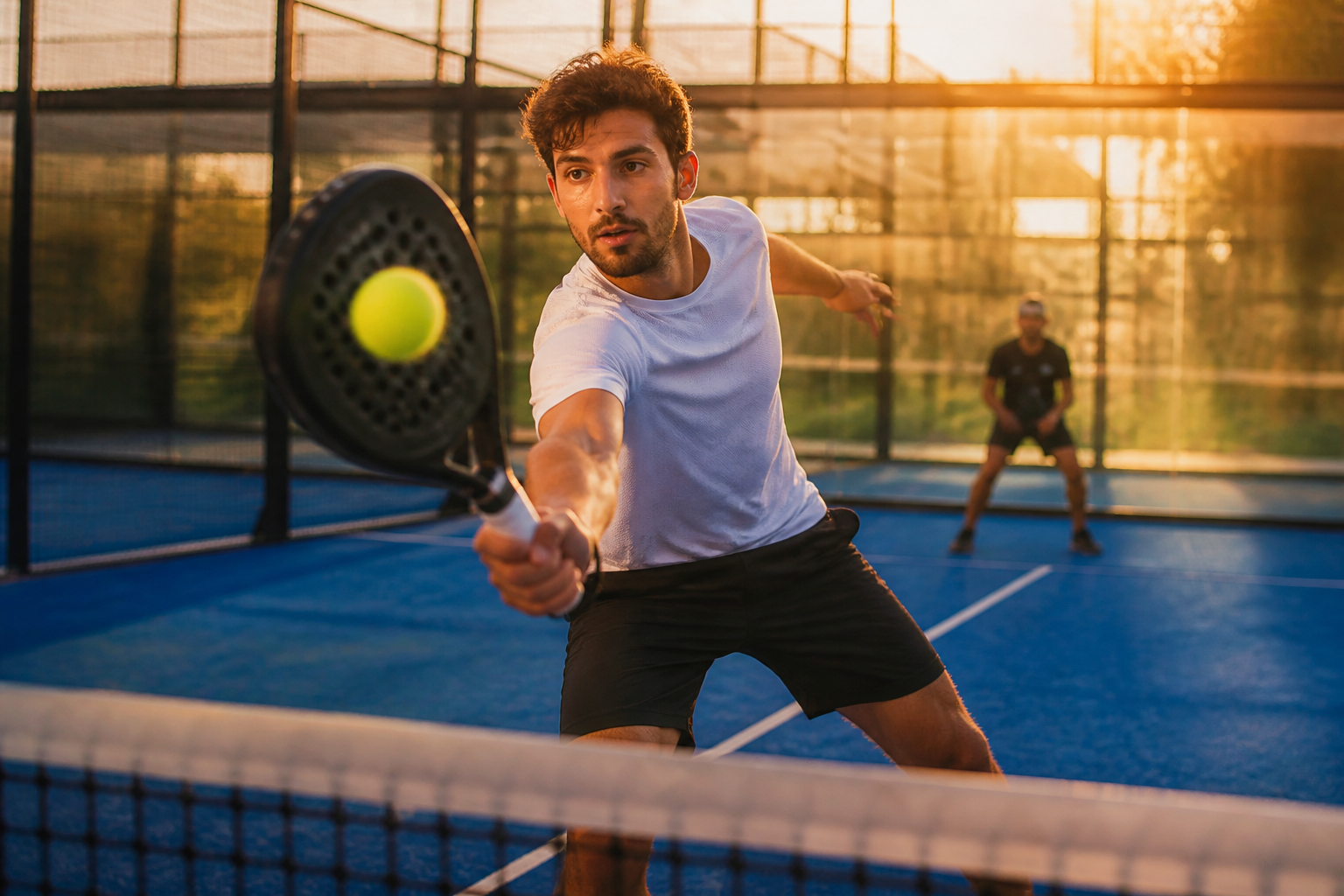
The bandeja is arguably the most iconic and essential shot in padel. Derived from the Spanish word for "tray," it is the bridge between defense and attack. Unlike tennis, where an overhead usually means a point-ending smash, the padel bandeja is a tactical reset designed to keep you at the net and your opponents pinned to the back of the court.
For players across UK clubs—from the busy courts of Stratford Padel Club to the growing hubs in Bristol and Manchester—mastering this shot is the difference between being a "tennis convert" and a true padel tactician. If you find yourself constantly being lobbed and scurrying back to the baseline, it’s time to refine your tray technique.
The Purpose: Why We Bandeja
Before we look at the feet and hands, we must understand the "why." You play a bandeja when the opponent’s lob is too deep to smash (the Remate) but high enough that you can still take it on the fly.
The primary goals are:
* Maintain Net Position: You hit the ball and immediately move back to the "attack zone."
* Control the Pace: You aren't looking for a winner; you're looking for a low-bouncing, awkward ball that stays deep in the corner.
* Forcing the Error: By using slice (sidespin), the ball dies off the back glass, making it incredibly difficult for the opponent to return.
Step 1: The Preparation (The "T" Position)
The moment you see the lob leave your opponent’s racket, your work begins. You cannot hit a successful bandeja with your chest facing the net.
* Turn Sideways: Pivot immediately. Your non-dominant hand should point towards the ball (and the side fence), helping you track the flight path.
* The Racket Set-up: Bring your racket back early. Think of a waiter carrying a tray—the racket face should be open and pointing towards the sky.
* The "Double Rhythm" Footwork: Use small, lateral adjustment steps. Equipment choice matters here; if you’re wearing shoes with poor grip on the UK’s common sand-based synthetic grass, you’ll slip while retreating. We recommend the Babolat Jet Premura 2 or Wilson Bela Pro for their superior traction on sand-heavy courts.
Step 2: The Contact Point
The biggest mistake club players make is hitting the ball too high or too low.
* Height: Ideally, you want to impact the ball at roughly eye level or slightly higher, out to the side of your body. If you hit it too high, you’ll likely dump it into the net; too low, and you’ll create a "sitter" for your opponent to attack.
The Slice: You aren't hitting through* the ball like a flat tennis drive. You are "shaving" the side and bottom of the ball. This creates that signature slice that makes the ball skid off the glass.
* Racket Choice: If you struggle with the "feel" of this slice, a racket with a textured surface is a game-changer. The Nox AT10 Luxury Genius (Agustín Tapia’s weapon) or the Bullpadel Vertex 04 feature "Topspin" or "Sand" finishes that help grab the ball and accentuate the spin.
Step 3: The Mechanics and "The Push"
Unlike the power-heavy smash, the bandeja is a "push" or a "guided" shot.
* Don't Snap the Wrist: Keep your wrist firm. The power comes from your core rotation and the forward momentum of your body.
* Targeting: In a standard cross-court bandeja, aim for the "corner of death"—the junction where the side glass meets the back glass. UK indoor courts can often be a bit "faster" or "livelier" than outdoor Spanish courts; adjust your power accordingly so the ball doesn't bounce too high off the glass.
* The Follow-Through: Your racket should finish across your body towards your opposite hip/shoulder.
Equipment Spotlight: The Right Tool for the Job
The bandeja relies on a balance of maneuverability and control. A head-heavy, diamond-shaped racket like the Babolat Technical Viper provides incredible power for smashes, but beginner to intermediate players might find it "clunky" for the quick preparation of a bandeja.
For those focusing on improving their bandeja, a teardrop-shaped racket is the "Goldilocks" choice:
* Head Speed Motion: Extremely lightweight and aerodynamic, allowing for fast preparation.
* Adidas Adipower Multiweight CTR: Offers a large sweet spot and a "sandback" surface for maximum spin control.
Common Mistakes to Avoid
1. Back-pedalling in a straight line: Never run backwards facing the net. You will lose your balance and risk injury. Always turn and use side-steps.
2. Over-hitting: If you hit the bandeja too hard and it hits the back glass without touching the floor first, it’s a "gift" for your opponent. Focus on 60-70% power.
3. Falling backwards: On impact, your weight should be transferring forward. If you are leaning back, the ball will float, giving the opponents a chance to counter-attack.
Drills for the UK Club Player
Since court time in the UK can be premium, use your warm-ups wisely.
* The "Shadow" Bandeja: Before your match, practice the lateral movement and the "waiter's tray" arm position without a ball. Focus on the speed of the first step.
* Two-on-One Feeding: Have a partner lob you repeatedly from the baseline. Practice your bandeja deep into the corners. If the ball bounces twice before hitting the back glass, you’ve mastered the pace.
* The "Net-to-Net" Transition: Hit a bandeja, then immediately sprint back to the net to volley a simulated return. This reinforces the tactical goal of the shot.
Tactical Variations: Bandeja vs. Vibora
As you progress into the higher LTA Padel ratings, you’ll want to distinguish between the bandeja and the vibora (the viper).
* Bandeja: Conservative, high-clearance, focused on position.
* Vibora: More aggressive, hit with more side-spin and speed. This is usually played when the lob is shorter and you have time to "punish" the ball.
For the vibora, a racket with a bit more "bite" and stiffness, such as the Head Delta Pro or the Wilson Staff, can help generate that vicious side-spin that forces the ball to "snake" across the court.
Master the Foundation
The bandeja isn’t the most glamorous shot in padel—it won't get as many cheers as a Por Tres smash that flies out of the court—but it is the shot that wins matches. It is the signature of a disciplined, intelligent player.
Next time you head to your local court, focus less on the power and more on the "tray." Set your feet, open the racket face, and guide the ball into the corner. Once you control the bandeja, you control the net. And in padel, he who controls the net, controls the game.
By PadelHub Editors · 04/06/2026