
Round, Teardrop or Diamond? Padel Racket Shapes Explained
Master your game by choosing the perfect frame: here's everything you need to know about round, teardrop, and diamond padel rackets.
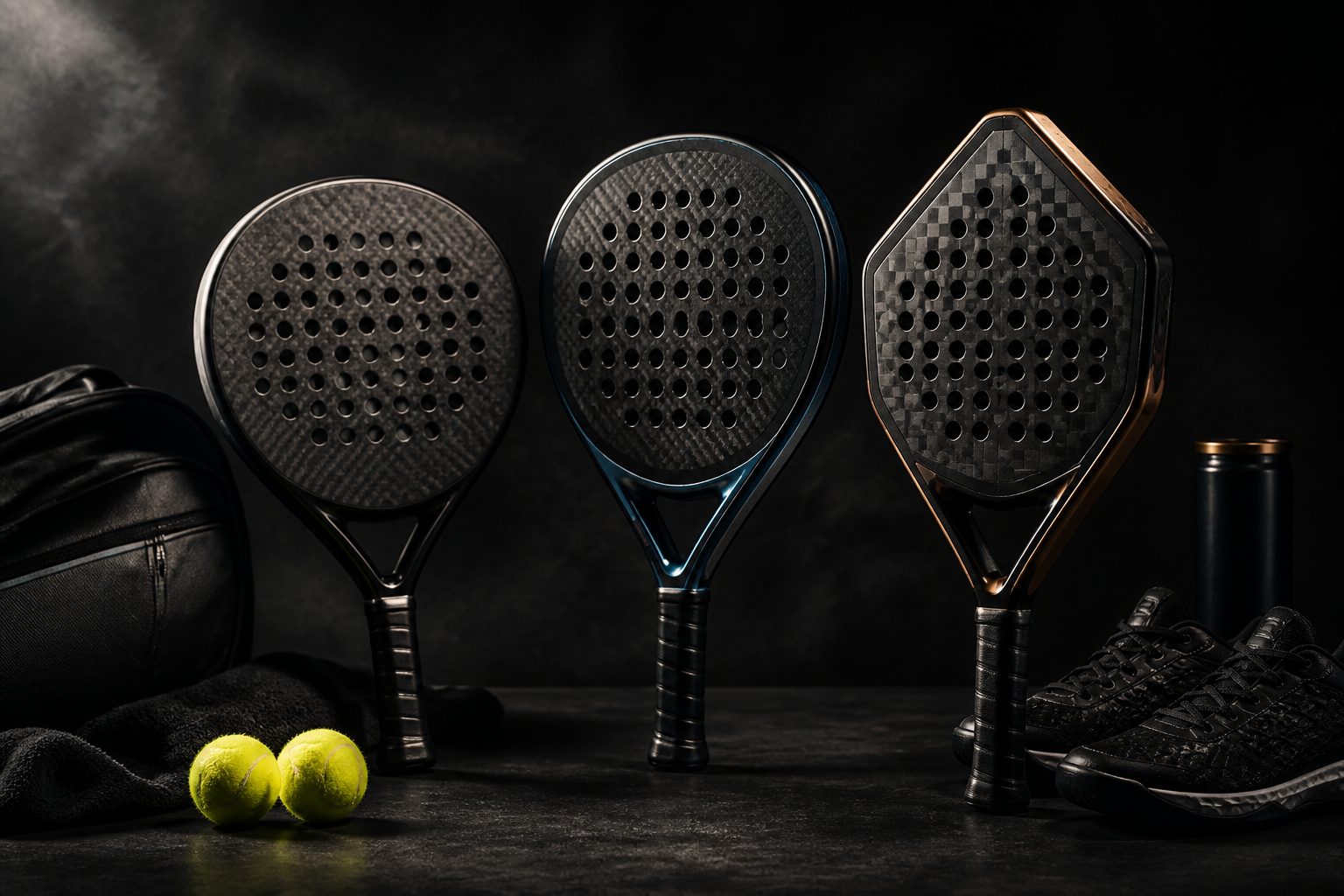
Choosing your first—or even your fifth—padel racket can feel like navigating a minefield of marketing jargon and flashy aesthetics. At PadelHub UK, we see players every week turning up to the courts with a top-of-the-range "Pro" racket, only to find themselves struggling with unforced errors and "tennis elbow." In padel, your racket isn't just a tool; it’s an extension of your arm. The most fundamental decision you will make in your selection process is the shape of the frame.
The shape dictates where the weight sits (the balance) and where the "sweet spot" is located. Whether you are playing at a local club in London or a rural court in the Cotswolds, understanding these three core geometries—Round, Teardrop, and Diamond—is essential to progressing your game and avoiding injury.
The Round Shape: Control and Consistency
The round racket is often erroneously labelled as "the beginner’s choice." While it is indeed the best entry point for newcomers, many World Padel Tour professionals and high-level club players in the UK choose round frames for their defensive reliability.
Characteristics:
* Low Balance: The weight is distributed closer to the handle (the throat), making the racket feel light and easy to manoeuvre.
* Large Sweet Spot: The hitting area is located dead-centre and covers a wider radius, meaning off-centre hits are less punishing.
* Manoeuvrability: Because the weight isn't "head-heavy," you can react quickly at the net during fast volleys.
Who is it for?
Round rackets are ideal for "Control" or "Right-side" players whose job is to keep the ball in play, defend lob attempts, and wait for the perfect opening. If you are a beginner, a round racket like the Adidas Adipower CTRL or the Nox ML10 Pro Cup (a legendary staple in the padel world) will help you find your rhythm without the frustration of constant frames.
Pros:
* Excellent for defending off the back glass.
* Reduced risk of wrist and elbow strain.
* Highest level of precision.
Cons:
* Difficult to generate "smash" power.
* Requires more physical effort to accelerate the ball.
The Diamond Shape: Pure Power
Diamond-shaped rackets are the heavy hitters of the padel court. If you’ve ever watched a pro like Juan Lebrón or Ale Galán, you’ll notice they often opt for this aggressive geometry. In the UK, as players transition from tennis to padel, they often gravitate toward diamond shapes because they crave that familiar overhead power.
Characteristics:
* High Balance: The weight is concentrated at the top (the head) of the racket. This creates a "pendulum" effect that generates massive leverage on smashes.
* High Sweet Spot: The hitting area is smaller and located toward the tip of the frame.
* Technical Demand: These rackets are unforgiving. If you hit the ball slightly low on the face, the shot will "die" or lack direction.
Who is it for?
Advanced players with a refined technique. If your game is built on high-intensity volleys and the "Bandeja" or "Smash," a diamond racket is your best friend. Iconic examples include the Babolat Technical Viper (used by Juan Lebrón) or the Bullpadel Vertex 04.
Coach’s Warning: For intermediate players in the UK, be wary of the "Diamond Trap." Our often damp, cold British climate makes the ball heavier and slower. Using a head-heavy diamond racket in these conditions can significantly increase the risk of epicondylitis (tennis elbow) if your technique isn't perfect.
The Teardrop Shape: The Versatile All-Rounder
The Teardrop is the "Goldilocks" of padel shapes. It sits comfortably between the Round and Diamond, offering a hybrid profile that attempts to provide the best of both worlds.
Characteristics:
* Medium Balance: The weight is distributed more toward the middle.
* Medium Sweet Spot: Located slightly higher than a round racket but more generous than a diamond.
* Power/Control Ratio: Typically provides a 50/50 or 60/40 split in favour of power.
Who is it for?
Teardrop rackets are the most popular choice for intermediate-to-advanced players who haven't yet specialised in a specific role. If you like to attack but don't want to sacrifice defensive stability, this is the shape for you. The Head Alpha Motion (or the newer Head Extreme series) and the Wilson Bela Elite are fantastic examples of frames that provide "pop" on the volley while remaining manageable in the corners.
At a Glance: Comparison Table
| Feature | Round | Teardrop | Diamond |
| :--- | :--- | :--- | :--- |
| Balance | Low (Handle) | Mid (Centre) | High (Tip) |
| Sweet Spot | Large / Middle | Medium / Mid-High | Small / High |
| Skill Level | Beginner to Pro | Intermediate to Pro | Advanced Only |
| Primary Goal | Control / Defence | Versatility | Power / Attack |
Why Material Matters Just as Much
While shape is the headline, the "innards" of your racket play a supporting role. When browsing brands like Nox or Bullpadel, you will see references to EVA Rubber and Carbon Fibre.
1. Soft Foam (FOAM/Soft EVA): Usually found in round rackets. It absorbs vibration and helps the ball rebound with less effort. Great for the UK winter when the ball feels like a brick.
2. Hard Foam (Black EVA/High Density): Often found in diamond rackets. It requires more swing speed but provides incredible "output" for powerful players.
3. Carbon vs. Fibreglass: Fibreglass is more flexible (control/comfort), while Carbon is stiffer (power/durability).
Factors to Consider Before You Buy
Choosing a shape isn't just about your skill level; it's about your physical profile and the context of your play.
* Injury History: If you have had issues with your elbow or shoulder, stick to Round or Teardrop. The leverage of a Diamond racket puts significantly more torque on your joints.
* The "Tennis Background" Factor: Many UK players come from a tennis background. If you have a full, fast swing, you might find a Diamond racket causes you to hit the back glass far too often. You may actually find more success with a Teardrop that offers "contained" power.
* Court Conditions: In the UK, many courts are outdoors. On a cold, misty Tuesday night in Manchester, a round racket with a soft core will be much easier to play with than a stiff, diamond "power" racket which requires heat to make the materials responsive.
Practical Tips for Your Next Purchase
1. The "Demo" Rule: Never buy a racket based on its shape alone without testing it. Most UK clubs (such as Padel United or Stratford Padel Club) have demo days. Borrow a Head or Adidas demo and play a full set.
2. Don't Buy for Your "Future Self": Buy the racket for the player you are today. If you're struggling to keep the ball in the court, a Diamond racket will only make you more frustrated, even if you hope to be an aggressive player one day.
3. Check the Weight: Regardless of shape, most rackets range from 345g to 375g. A Round racket at 375g can feel "heavier" than a Diamond at 350g. Always check the weight in conjunction with the shape.
Final Thoughts
The architecture of a padel racket is the foundation of your performance. If you are a beginner, start with a Round frame—it’s the fastest way to learn the game's nuances. As your "bandeja" improves and you start finding the corners with ease, a move to a Teardrop will give you that extra edge in the overheads. Save the Diamond for when you are consistently finishing points and have the forearm strength to handle the head-heavy balance.
Padel is a game of patience and strategy. Choose the shape that allows you to play one more ball than your opponent, and the wins will follow. Happy hitting!
By PadelHub Editors · 04/06/2026