
Padel Doubles Strategy: Communicating With Your Partner
Master the court and crush your rivals with these essential communication tactics for winning padel doubles.
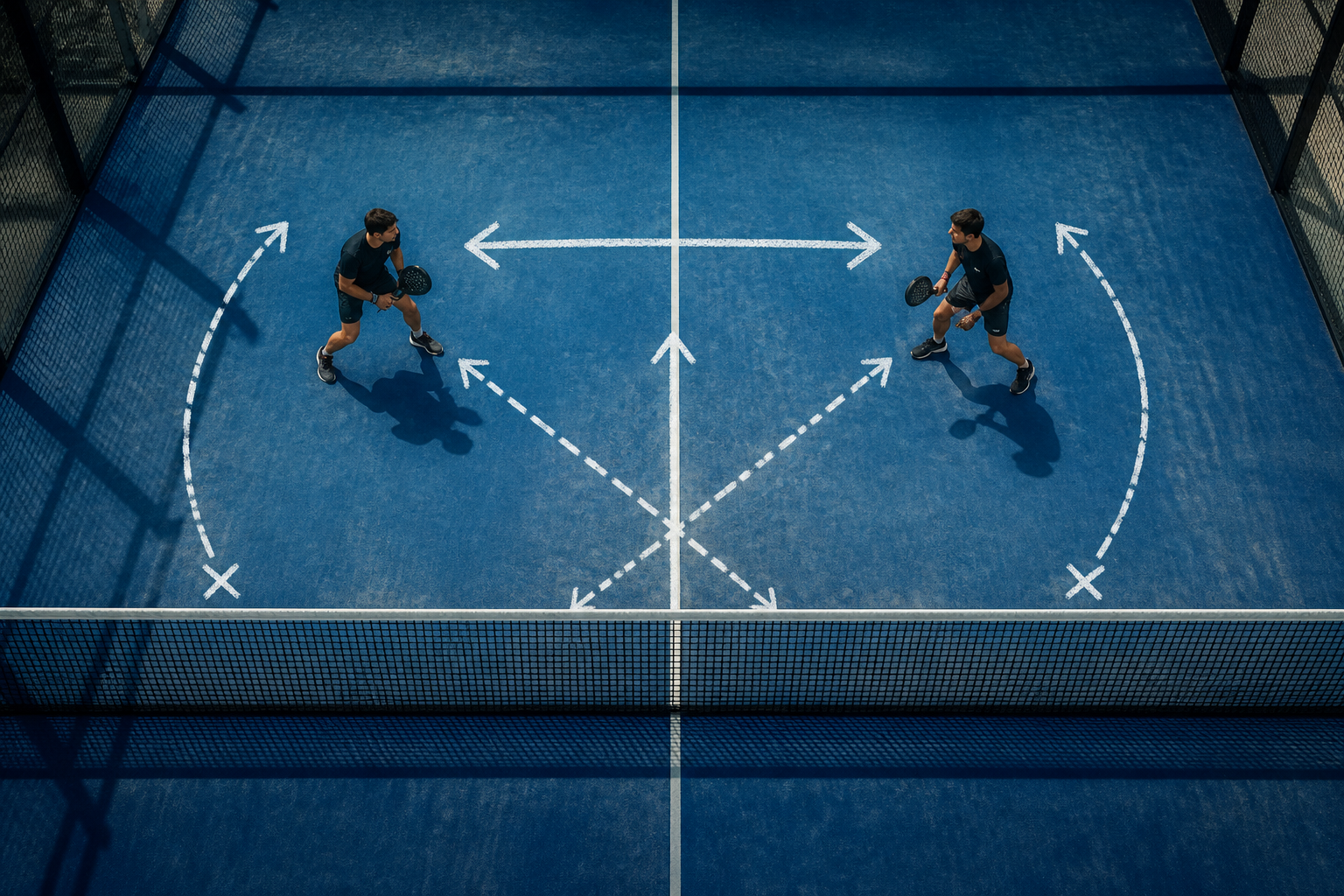
In the world of high-level padel, the difference between a mid-level club player and a seasoned competitor often has nothing to do with the quality of their vandeja and everything to do with how they speak to their partner. Padel is a game of space, geometry, and psychology. While having a high-end Bullpadel Vertex or a Head Extreme Pro might give you more power on the smash, it won’t help you if both you and your partner are chasing the same lob or leaving a gaping hole down the middle of the court. Effective communication is the "third player" on your team, and in the UK scene—where the social nature of the sport is thriving at hubs like Stratford or Manchester—mastering the dialogue is the quickest way to climb the LTA rankings.
The Foundation: Pre-Match Tactical Briefing
Communication shouldn't start after the first point is played. It begins the moment you step onto the court for the warm-up. Whether you are using a control-oriented adidas Adipower or a technical Babolat Viper, your strategy needs to be aligned.
* Determine Sides: Usually, the more aggressive player or the one with a stronger smash takes the left side (for right-handers).
* The "Mine/Yours" Rule: Establish who takes the balls down the middle. Conventionally, the player on the left takes the middle ball because their forehand is in the centre, but this can change depending on your partner's mobility.
* Identifying the Weak Link: During the five-minute warm-up, observe your opponents. Is their backhand weak? Do they struggle with the glass? Use this time to whisper a quick "Let’s test the backhand of the player in the blue shirt."
Real-Time Navigation: The "Caller" System
Padel is incredibly fast. Most errors occur when players are stuck in "No Man's Land" or are unaware of where the opponents have moved. In professional circuits (WPT/Premier Padel), you will notice players talking constantly while the ball is in the air.
If you are the player at the back returning a lob, your partner at the net is your "eyes." They must provide constant data. Use short, sharp commands:
* "Both Back": Both opponents have retreated to the glass. This tells you that you can play a shorter, softer shot or a drop shot.
* "One Up, One Back": This indicates a gap in the court. You should target the player who is transitioning.
* "Both Up": The opponents are at the net. You need to play a high, deep lob to reset the point or a hard shot at their feet.
* "Stay": A vital command telling your partner not to switch sides during a high lob.
Mastering the "High-Five" Psychology
One uniquely British trait on the padel court is the tendency to apologise after a missed shot. Stop saying "sorry." Instead, use positive reinforcement to maintain the "momentum" of the pair.
The psychological bond between partners is why pairs like Coello and Tapia are so dominant; they trust each other's footwork and technical choices. Between every single point—win or lose—meet in the middle. A quick tap of the rackets (especially if you're both sporting the latest Nox AT10 as a nod to Agustin Tapia) or a "Good effort, let’s go again" keeps the energy levels high. If your partner is struggling with their bandeja hitting the net, don't coach them mid-game—encourage them to aim for a bigger target.
The Middle Ball: Solving the "Divorce Gap"
The most common point-winner in UK club padel is the ball hit directly down the middle. This is often called the "Divorce Gap" because it causes more arguments than anything else.
To solve this, you need Over-Communication.
1. "Yours!" or "Mine!" must be shouted loud and early.
2. If both players go for it, don't get frustrated. It shows you are both active.
3. The Cross-Court Priority: Generally, the player who is cross-court from the hitter has a better angle to see the ball. If they say "Mine," the straight-line player must step out of the way immediately.
Hand Signals and Tactical Shifts
As you progress to more advanced play, vocal communication can sometimes tip off your opponents. Many top-tier UK players have adopted the "hand behind the back" signal during the serve, similar to beach volleyball.
* Closed Fist: I am staying on my side after the serve.
* Open Palm: I am going to "poach" (cross over) to intercept their return.
* Point Finger: I want you to serve wide to the side glass.
Using these signals allows you to catch opponents off guard. If your partner is using a high-spin Wilson Bela Pro, a serve that kicks off the side glass is the perfect setup for you to cross and finish the point with a volley.
Communicating Through Equipment
It sounds strange, but your equipment choice communicates a lot to your partner about your intended style of play. If you show up with a Babolat Technical Viper, your partner knows you are looking to finish points with power. If you are using a Head Gravity Elite, you are playing a defensive, "building" role.
Match your equipment to your communication style. A defensive player should be the "Director," calling out the movement of the opponents, while the aggressive player focuses on the execution of the kill shots.
The "After-Action" Review
Once the match is over, whether you’ve played at a premium facility like Rocks Lane or a local club in Birmingham, the communication shouldn't stop.
Professional padel coaches suggest a "three-point debrief":
1. What went well? (e.g., "Our lobs were consistently deep.")
2. Where was the confusion? (e.g., "We lost three points because we both went for the middle ball.")
3. The Goal for next time: (e.g., "Next time, let's try to be more vocal when we are at the net.")
Summary Tips for Your Next Match
To immediately improve your partnership, implement these three UK-specific tips in your next session:
* The 3-Second Rule: After your partner hits their shot, you have roughly three seconds to tell them where the opponents are before they have to hit the ball again. Use that time wisely.
* Volume Matters: Padel courts are noisy, especially in indoor centres with high ceilings. Don't whisper—project your voice so there is no ambiguity.
* Positive Body Language: Even if you aren't talking, how you stand matters. If your shoulders drop, your partner will feel the pressure. Keep your head up, stay on your toes, and keep that racket high.
Padel is a game of two halves that must function as one. You can have the best kit in the world, from Nox to Adidas, but without a clear line of communication, you are just two people playing on the same court. Talk more, win more.
By PadelHub Editors · 04/06/2026