Padel Balls: Which Type to Buy and How Long They Last
Stop wasting money on dead bounce: here’s how to choose the right padel balls for your game and exactly when to swap them out.
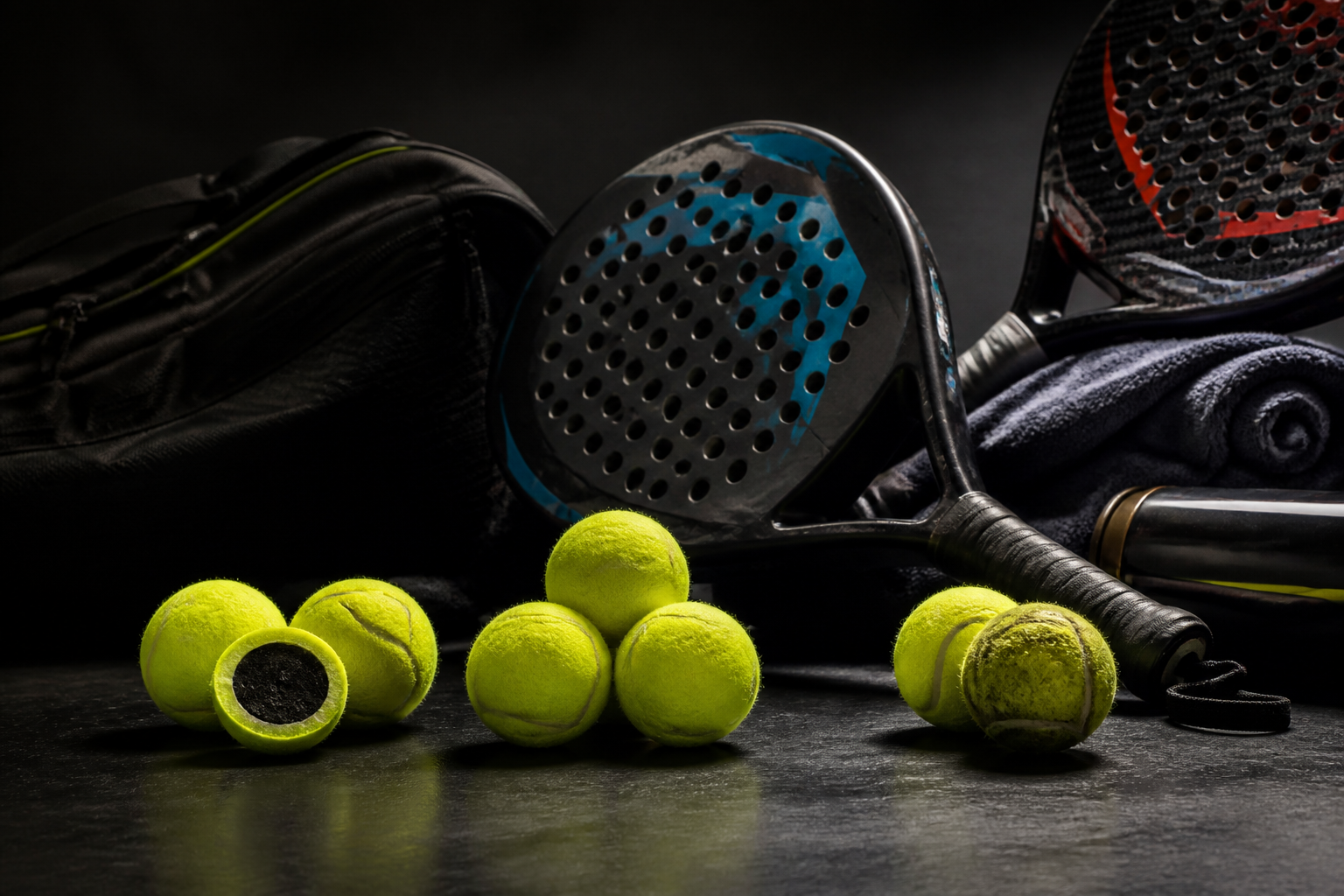
In the world of padel, players often spend hundreds of pounds on the latest carbon-fibre rackets and high-end footwear, yet they frequently overlook the most critical component of the game’s physics: the ball. If you’ve ever walked onto a court in the UK and felt like you were hitting a "dead" piece of felt, or conversely, struggled to keep the ball inside the cage on a warm day, you’ve experienced the impact of ball Choice. Understanding the nuances between brands and speed ratings isn't just for the pros; it is essential for anyone looking to maintain the integrity of their game.
The Anatomy of a Padel Ball: It’s Not a Tennis Ball
The most frequent question I get from beginners at the club is: "Can we just use tennis balls?" The short answer is no. While they look nearly identical, padel balls are designed specifically for the dimensions of a 20x10m court.
An official padel ball has a lower internal pressure than a tennis ball. This results in a slightly smaller bounce and a slower pace through the air, ensuring the ball stays in play longer. Using a tennis ball—which is livelier and higher-pressured—makes the game too fast, rendering the tactical use of the glass almost impossible. When shopping, always look for the "FIP Approved" (International Padel Federation) seal.
Speed Categories: Pressure vs. Altitude
Most major manufacturers, such as Head, Bullpadel, and Wilson, now offer two distinct types of balls. Understanding which one to buy depends entirely on your environment and playing style.
1. The "Standard" Ball (Control & Durability)
These are designed for fast conditions—hot weather or high altitude. Because heat increases the internal pressure of a ball, a "standard" ball is slightly less pressurised to compensate.
Examples: Head Padel Pro, Bullpadel Premium Pro, Wilson X3*.
* Best for: Summer months in the UK or indoor courts with high temperatures. They offer more control and longer rallies.
2. The "S" or "Speed" Ball (Power & Response)
These are high-pressure balls designed for slow conditions—cold weather, high humidity, or sea-level play.
Examples: Head Padel Pro S, Bullpadel Next, Adidas Speed RX*.
* Best for: The typical British winter. If you are playing outdoors in Manchester or London in November, a standard ball will feel like a stone. The "S" versions provide that extra "pop" needed to get the ball out of the court (the "Por Tres").
Brand Breakdown: Which should you choose?
Every brand has a slightly different "feel" on the strings. Here is how the market leaders stack up:
Head: The gold standard. The Head Padel Pro is the official ball of many professional tours. It is remarkably consistent but can be a bit stiff. The Pro S* is significantly faster and is arguably the most popular ball in UK clubs due to our damp climate.
Bullpadel: Known for the Gold and Premium Pro*. These tend to have a slightly "fluffier" felt, which can make them feel a bit more comfortable on the arm but may pick up moisture faster on outdoor courts.
Wilson: The Wilson X3 and X3 Speed* are designed with sustainability in mind, featuring a felt that resists moisture absorption—a massive plus for UK players.
Babolat: Their Court and Ace balls are increasingly popular. The Ace* is remarkably fast and durable, often favoured by aggressive players who like to finish points early.
Nox/Dunlop: Dunlop has a long history in racket sports, and their Pro Padel* ball is widely considered the most durable on the market, maintaining its pressure longer than most competitors.
The UK Factor: Weather and Humidity
In the UK, our biggest enemy isn't just the cold; it’s the damp. Once the felt on a padel ball becomes damp, it gains weight and loses its ability to grip the glass.
Pro Tip: If you play outdoors in the UK, never leave your balls in your racket bag in the car overnight. The drop in temperature will cause the internal pressure to plunge, and the damp air will ruin the felt. Take them inside to a dry, room-temperature environment to maximise their lifespan.
How Long Do They Actually Last?
The lifespan of a padel ball is governed by two factors: Pressure and Felt.
1. The Professional Standard: On the pro tour, balls are changed every 7 to 9 games.
2. The Club Standard: For a high-intensity match, a fresh can of balls is ideally good for one match (1.5 to 2 hours). By the third set, you will likely notice a significant drop in "active" bounce.
3. The Recreational Standard: If you are playing casually, you can stretch a can to two or three sessions. However, by the third session, the balls will likely be "flat." You'll find yourself swinging harder to get the same result, which is a one-way ticket to "Padel Elbow" (lateral epicondylitis).
Signs your balls are dead:
* The Squeeze Test: If you can compress the ball significantly with your thumb, the gas has escaped.
* The Sound: A "dull" thud off the racket rather than a crisp "pop."
* The Bounce: Drop the ball from shoulder height. It should bounce back to roughly your waist. If it hits your mid-thigh, it's finished.
Maximising Your Investment: Pressurisers
Because padel balls are expensive (usually £5–£8 per can), many regular players now use pressure tubes like the Pascal Box or Tuboplus. These devices allow you to place the balls under high atmospheric pressure between games, forcing air back into the porous rubber core.
A pressuriser can extend the life of your balls from 3 hours of play to 10–12 hours. For a dedicated player, these gadgets pay for themselves within a couple of months.
Practical Buying Tips for UK Players
* Buy in Bulk: Don’t buy single cans at the club desk; you’ll pay a premium. Buy a "24-can box" online (from retailers like Padel Shack or Total Padel) to bring the cost per can down by 30%.
Match the Temperature: In the UK, keep a tube of "Speed" balls (like Head Pro S*) for winter and a tube of "Standard" balls for the rare three weeks of summer.
* Discard After Rain: If your balls get soaking wet during a rainy session in Bristol or Glasgow, they are effectively dead. Once the felt dries, it becomes "crispy" and the internal balance of the ball is ruined.
Final Verdict
If you are serious about improving your game, stop playing with "zombie balls" that have been in your bag for a month. For most UK club players, the Head Padel Pro S or the Adidas Speed RX are the safest bets for 90% of the year. They compensate for our heavy, humid air and ensure that the tactical overheads—the Bandeja and the Vibora—actually behave the way they are supposed to.
Invest in fresh balls, and your elbows (and your partner) will thank you.
By PadelHub Editors · 04/06/2026