
How to Use the Glass Walls: A Guide to Defensive Play
Master the glass: Learn how to turn Padel’s walls into your ultimate defensive weapon and stay in the point longer.
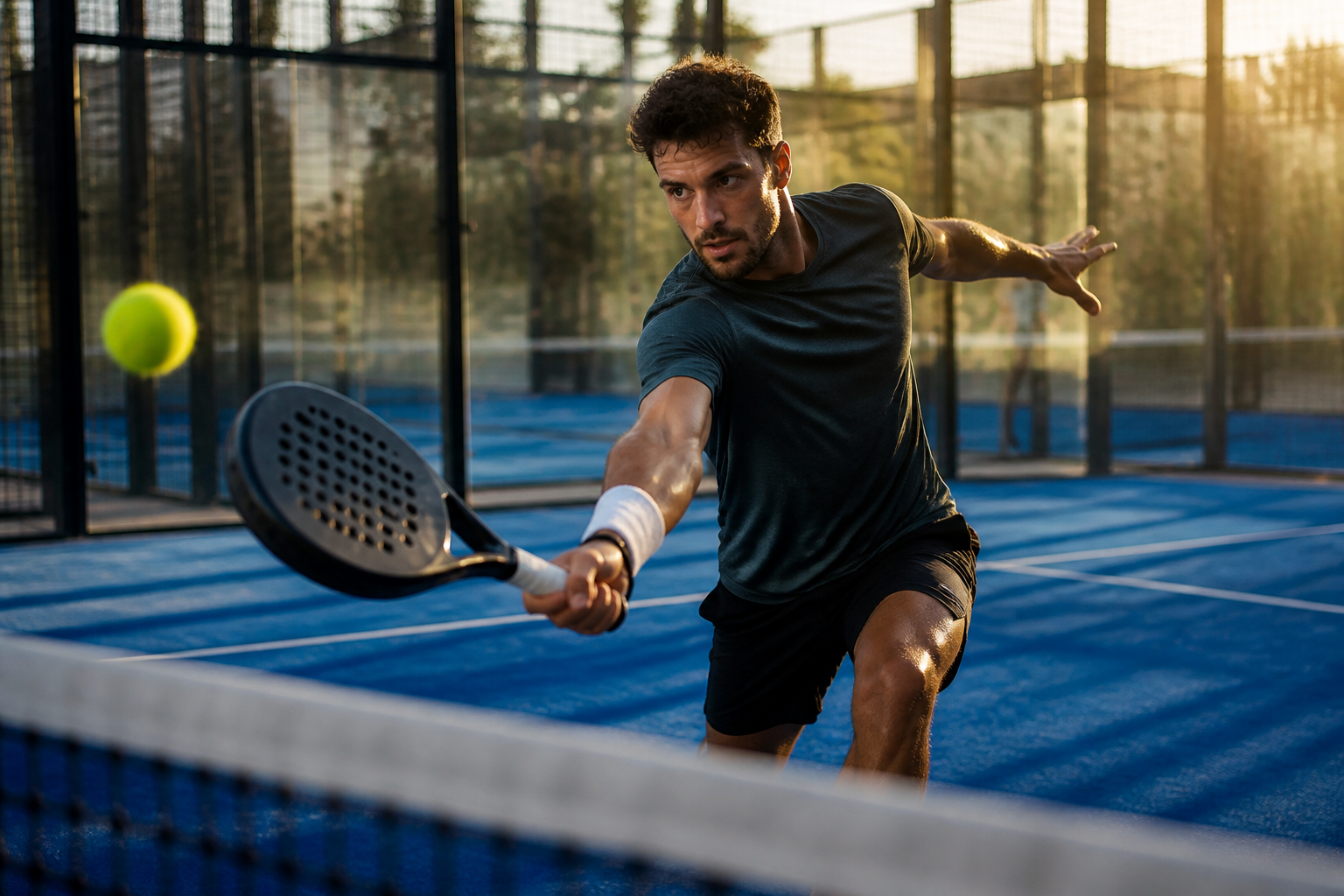
In the fast-paced world of UK padel, where damp courts and heavy balls often dictate the tempo, mastering the glass is the single biggest differentiator between a "tennis convert" and a true padel player. While beginners often fear the back wall, viewing it as a looming obstacle that ends the point, seasoned professionals treat the glass as their greatest ally. In padel, the glass isn’t an ending; it’s a second chance. If you want to climb the LTA Padel rankings or simply dominate the local ladder at your club, you must learn to “let it go” and use the geometry of the court to turn a defensive nightmare into an offensive opportunity.
The Psychology of the Back Wall: Patience over Panic
The biggest technical error I see across clubs in London and Manchester is the "panic poke." When a ball gets deep, players often rush forward to hit it before it hits the glass, resulting in a weak, flat shot that sits up perfectly for the opponents to smash.
To master defensive play, you must develop "glass confidence." The wall slows the ball down and brings it back into your hitting zone. Instead of fighting the ball’s momentum, you transition with it. Brands like Nox and Bullpadel have spent years engineering rackets with high "control" ratings—think of the Nox AT10 Luxury Genius—specifically to help players maintain a soft touch when absorbing this rebounded energy.
Positioning: The "Dancing" Footwork
Good glass play is 10% swing and 90% footwork. To use the wall effectively, you must beat the ball to the back of the court but remain behind it.
* The Shadow Move: As the ball passes you, move with it. Don't stand and watch. If the ball is heading for the back-right corner, your body should be angled, allowing you to "read" the bounce.
* The Distance Rule: Maintain a distance of roughly one racket-length from the glass. If you are too close, you’ll be cramped (hitting the "T-Rex" shot). If you’re too far, you’ll reach and lose balance.
* The Semi-Circle: For balls hitting the side glass and then the back glass (the "double glass"), move in a semi-circular path. This prevents you from getting pinned against the panels.
The Technical Execution: Shortening the Backswing
When playing off the glass, you rarely need a full wind-up. Using a racket like the Babolat Counter Vertuo, which offers a massive sweet spot, helps here. Because the ball already has momentum from the rebound, your job is to guide it.
1. Preparation: Get your racket back early, but keep the head of the racket above your wrists.
2. The "Push" Phase: Instead of a snap, think of a controlled push. You are using the ball’s own speed.
3. The Follow-Through: Aim high. In a defensive position, your goal is almost always a lob. A deep lob gives you time to recover your position at the net and forces your opponents back.
Mastering the "Bajada" vs. The "Salida de Pared"
In UK conditions, where the air is often dense, the ball might not always pop out high. You need to distinguish between two key shots:
* Salida de Pared (Wall Exit): This is your standard defensive exit. The ball is low or waist-high. Your goal is a lob or a low "chiquita" (a soft shot to the feet of the opponents).
Bajada de Pared (Decent from the Wall): If the ball bounces high off the glass—perhaps from a weak smash by your opponent—you can be aggressive. Top players using the Head Extreme Pro* use this moment to "tweak" the ball downwards with power. This is where the glass turns you from a defender into an attacker.
Equipment Choices for Defensive Mastery
If you find yourself struggling to "feel" the ball off the glass, your equipment might be working against you.
Racket Shape: Round or teardrop shapes are generally better for defense. The Adidas Adipower CTRL* series is legendary for this, providing the stability needed to redirect heavy balls.
Surface Texture: Rackets with a "sandpaper" or 3D grit finish (common in Wilson's Bela* range) can help you add the necessary spin to keep a defensive "chiquita" low over the net.
The Ball Factor: In the UK, we often use "S" (Speed) balls like the Head Pro S* to counteract the cold. These hop off the glass faster, requiring quicker feet and a more compact swing.
Dealing with the Side Glass and Corners
The corners are the "graveyard" for many intermediate players. To survive the corners, you must understand the angle of incidence.
* The Rule of Thumb: If the ball hits the side glass first, it will usually trend toward the center of the court. If it hits the back glass first, it will stay closer to the side wall.
* Opening the Gate: If the ball is tucked deep into the corner, you must "open the gate" by stepping back with your outside foot. This creates space for the racket to swing through without hitting the glass.
Practical Drills for Your Next Session
Next time you're at the court, skip the casual rally and try these focused drills:
1. The Hand-Feed Reset: Have a partner stand at the net and hand-feed balls directly into the back glass. Practice letting the ball pass you, waiting for the rebound, and lobbing it back to the feeder. Focus on 10 in a row without hitting the net.
2. Corner Snakes: Have a partner hit balls into the corners. Your goal is to move in a "U" shape, following the ball into the corner and out again, hitting a cross-court drive.
3. The "Late Hit" Challenge: Purposefully wait until the ball is at its lowest point after the rebound before hitting it. This builds the patience required to handle "dead" balls that don't bounce high.
Summary: Make the Glass Your Friend
Defensive play in padel is a game of chess, not a game of chicken. By embracing the glass, you stop rushing and start controlling. Remember: the glass is there to help you. It buys you time, it kills the opponent's pace, and it sets up the transitions that win matches.
Next time you see a ball flying past you, don't reach out in desperation. Turn, run with it, and wait for the glass to give you the perfect setup. Master the back wall, and you'll find that in the world of padel, the best defense truly is the foundation of a relentless offense.
By PadelHub Editors · 04/06/2026